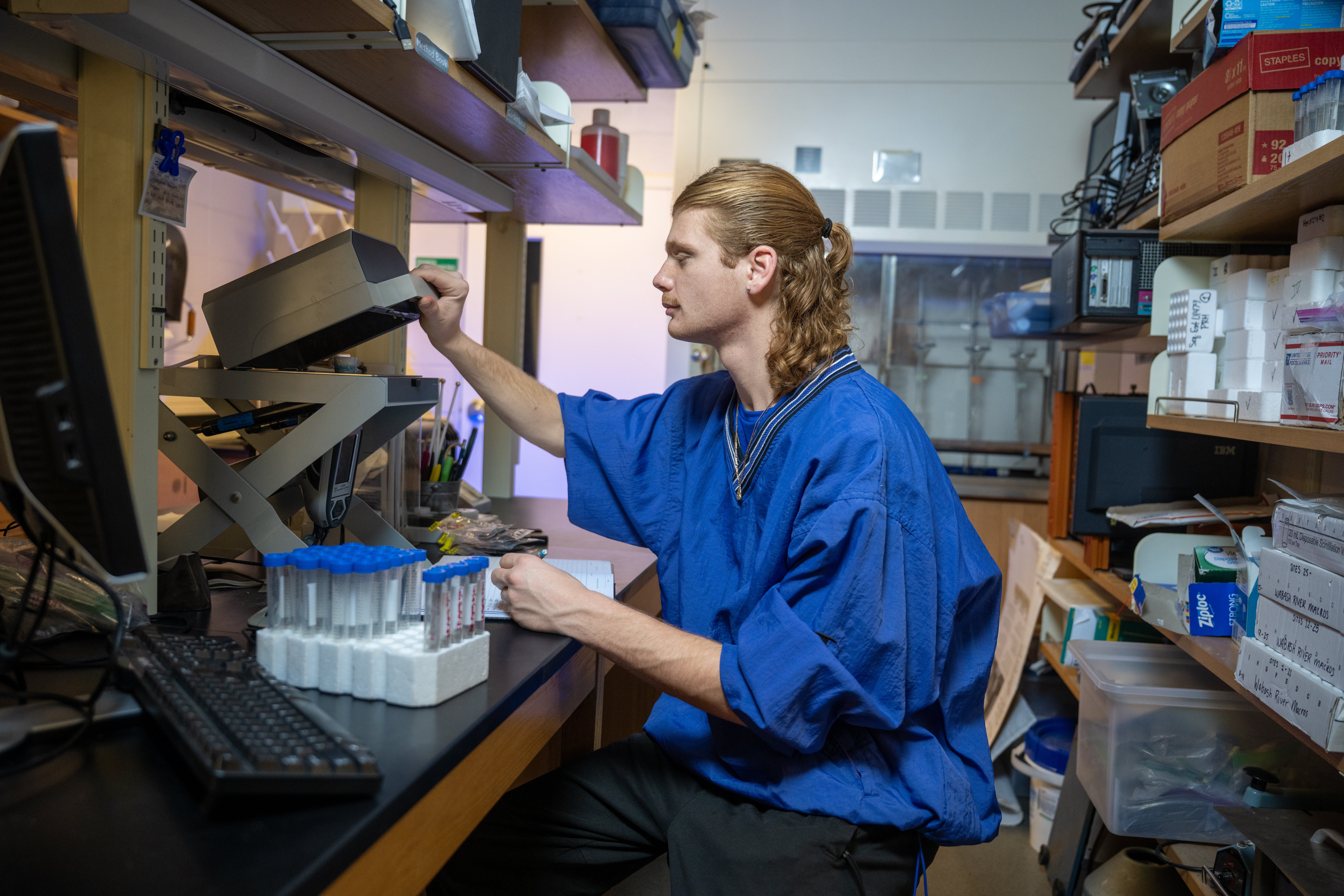
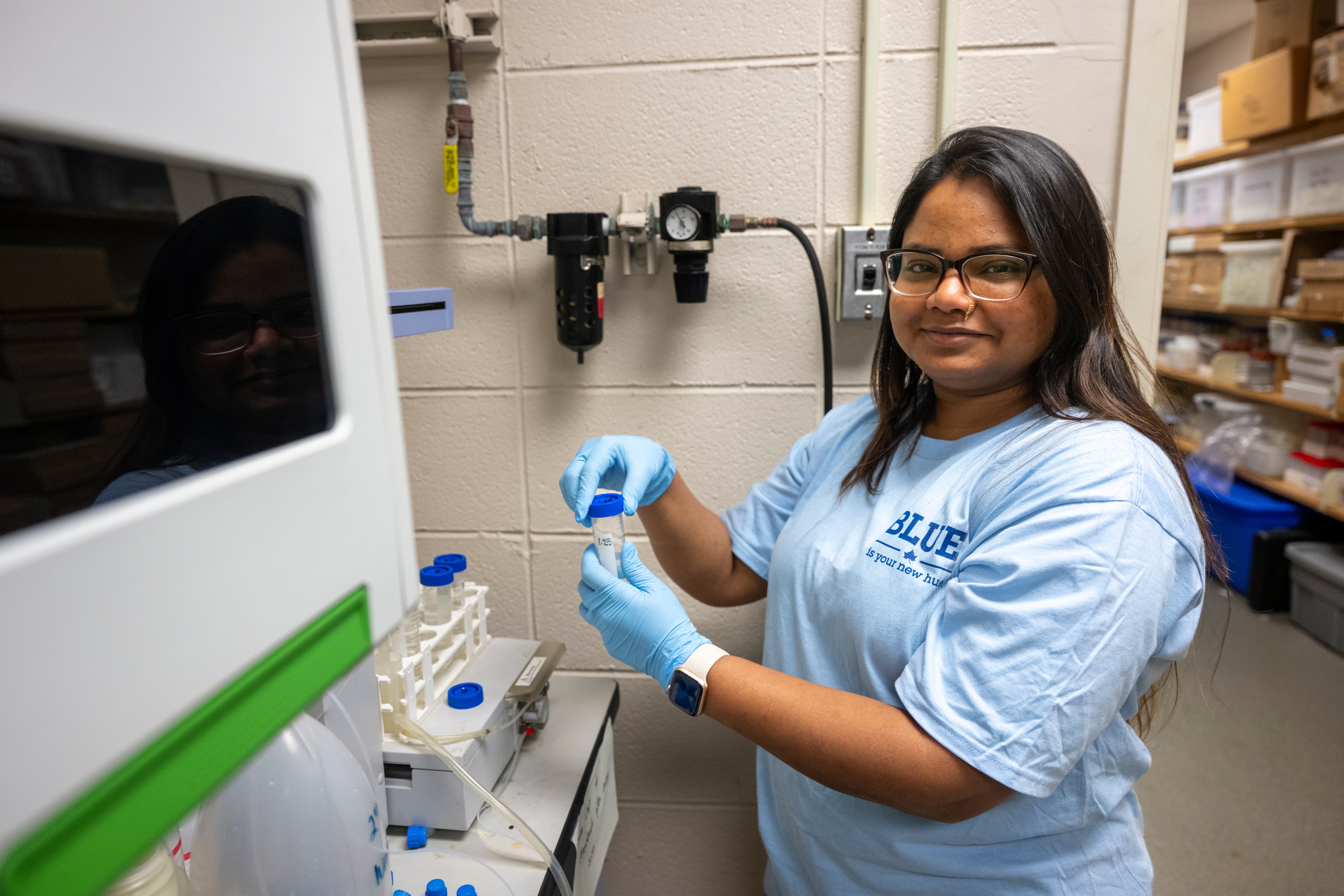
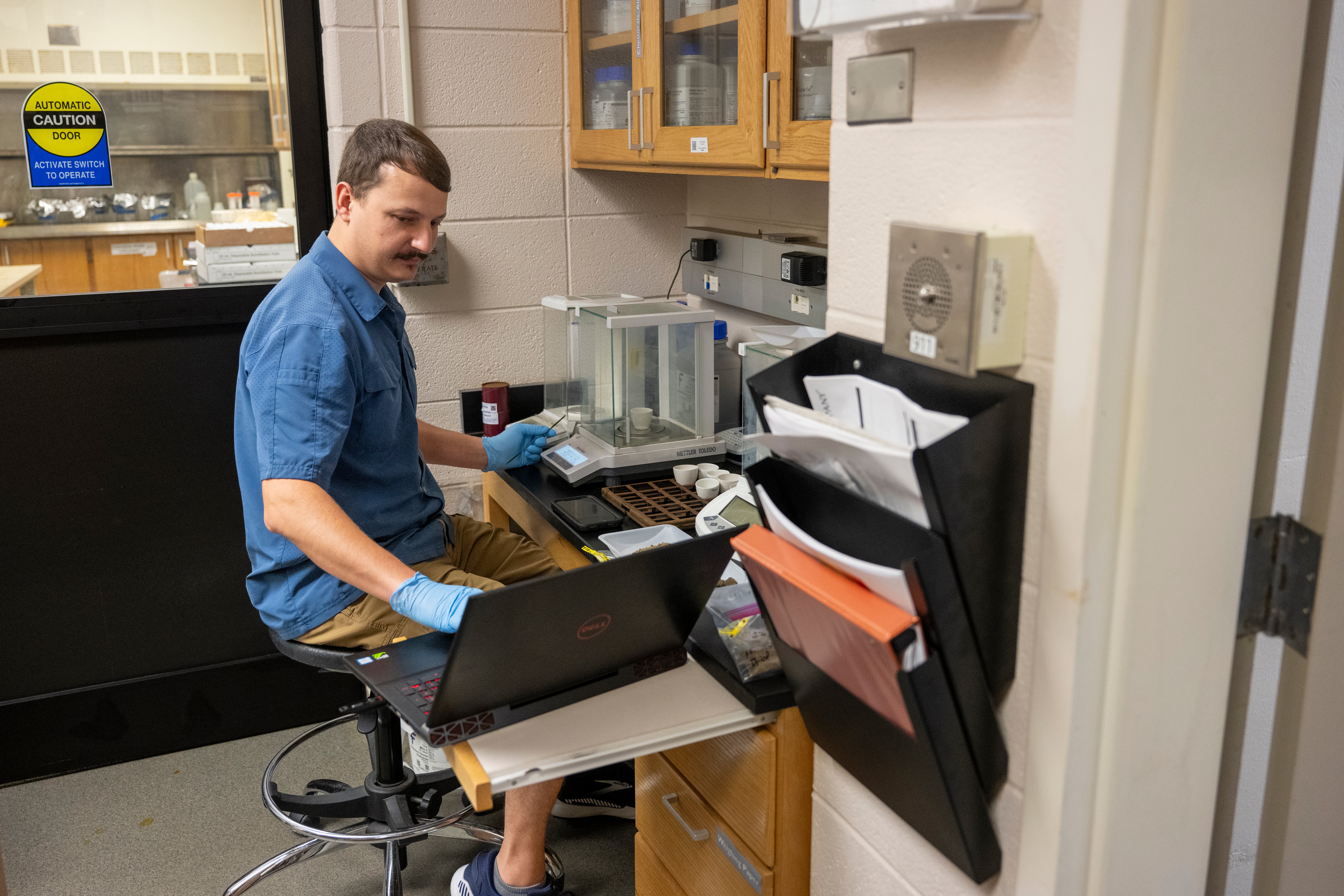
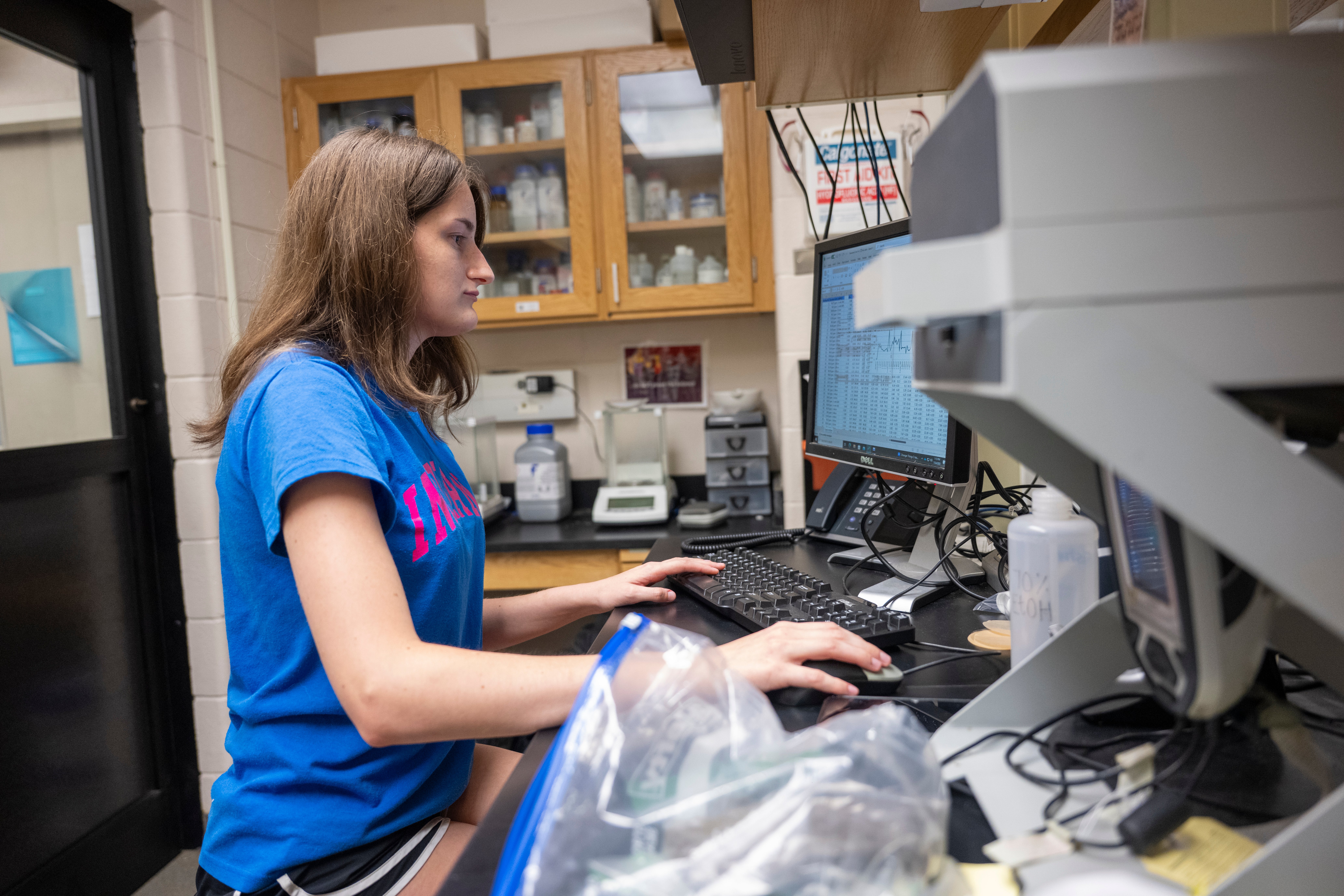
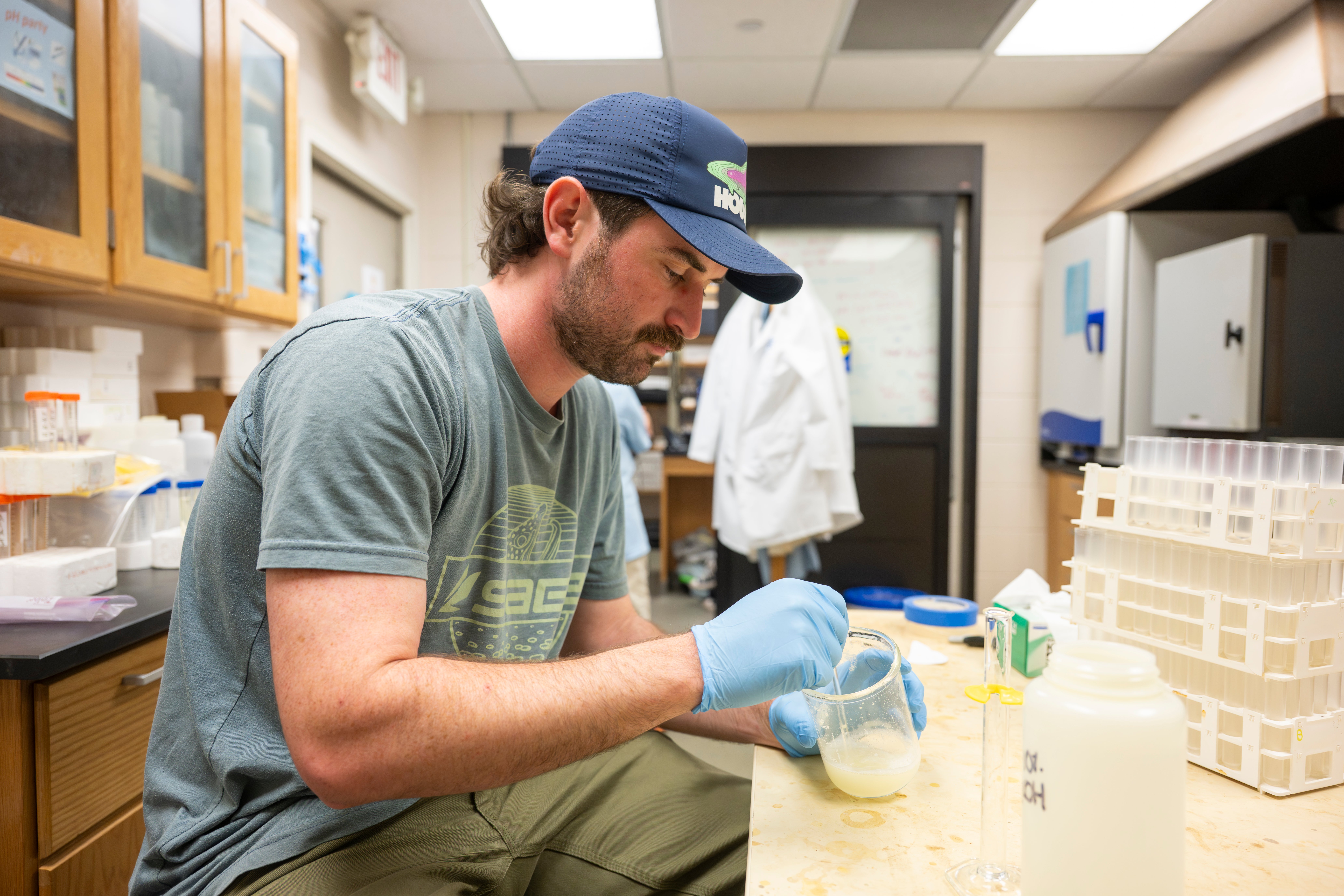
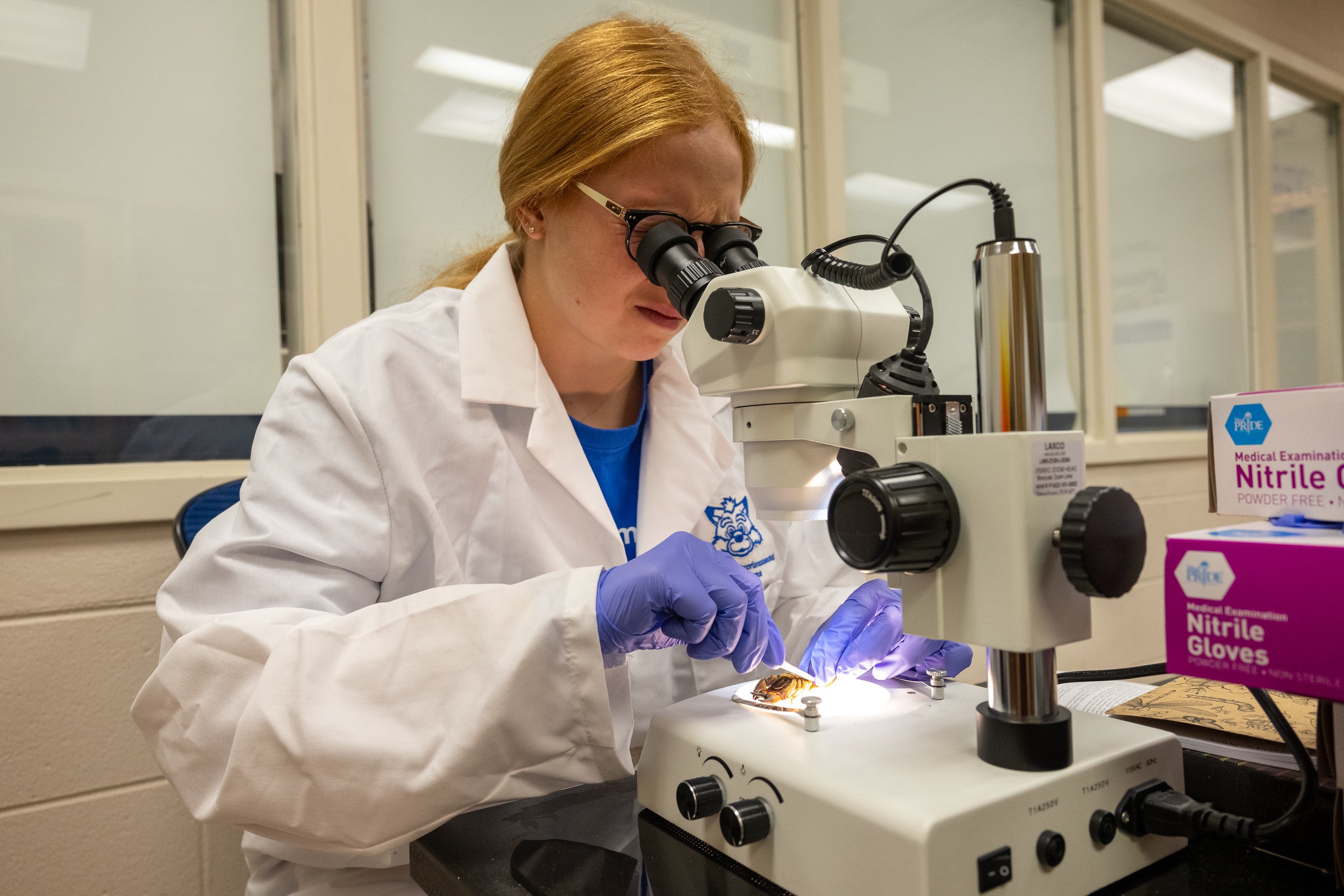
In the Biogeochemistry Laboratory at Indiana State University, Dr. Latimer and her students study human impacts on the environment and paleoclimate. Our projects focus on nutrients, like phosphorus, and metals in the environment and how their spatial and temporal patterns have changed over time ranging from decades to millions of years. Analytical instrumentation in the lab includes:

- Avio 550 Perkin Elmer Inductively Coupled Plasma-Optical Emission Spectrometer
- handheld Thermo-Niton XL3t Gold+ X-ray fluorescence analyzer
- Milestone DMA-80 Direct Mercury Analyzer
- Shimadzu UV-1900i Scanning UV-Visible Spectrophotometer.
- FreeZone freeze dryer
- Milestone Ethos UP microwave digestion system
- large capacity muffle furnace.
Recent projects have focused on mercury in river otter tissues, microplastics in Indiana crayfish, P burial in Lake Tanganyika, lead and mercury in urban soils, lead bioavailability in garden soils, and phosphorus and metal fluxes in cores recovered from the western Indian Ocean (southeastern coast of Africa).
We provide free lead screening of soil, in home dust, paint, and water.
Lead Poisoning is 100% Preventable
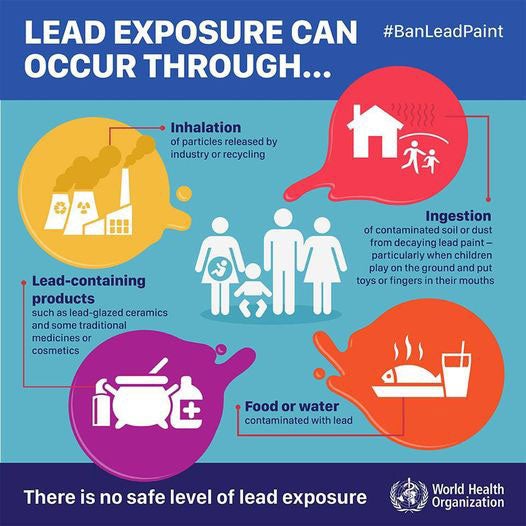
The World Health Organization and Centers for Disease Control have stated that there is no safe level of lead in the human body. Unfortunately, childhood lead poisoning continues to be an issue globally. Lead exposure can come from many sources that range from exposure to lead paint in and around homes, lead in soils, or even lead pipes. The best way to prevent expsoure to lead is to understand what your potential risks are. We can help by providing free lead screening of soil, paint, in home dust, and water. These analyses are completely free and designed to help you understand your potential for exposure.
Our residential lead screening kit guides your through the collection of samples that we can test for lead in your soil, water, paint, and dust in your home. In some cases, we can come to you to help samples your yard and home. In other cases, once you have the lead screening kit and have collected your samples, you can drop the samples off in our Department office or mail the samples to us.
For more information, contact Jen Latimer at 812-237-2289 or