Faculty in the Department of Psychology are actively engaged in research that spans many different areas and subfields of psychology. Students have the opportunity to work one-on-one with faculty on research projects. Interested students should contact the particular faculty member with whom they would like to work and ask about available projects.
Faculty Research Labs
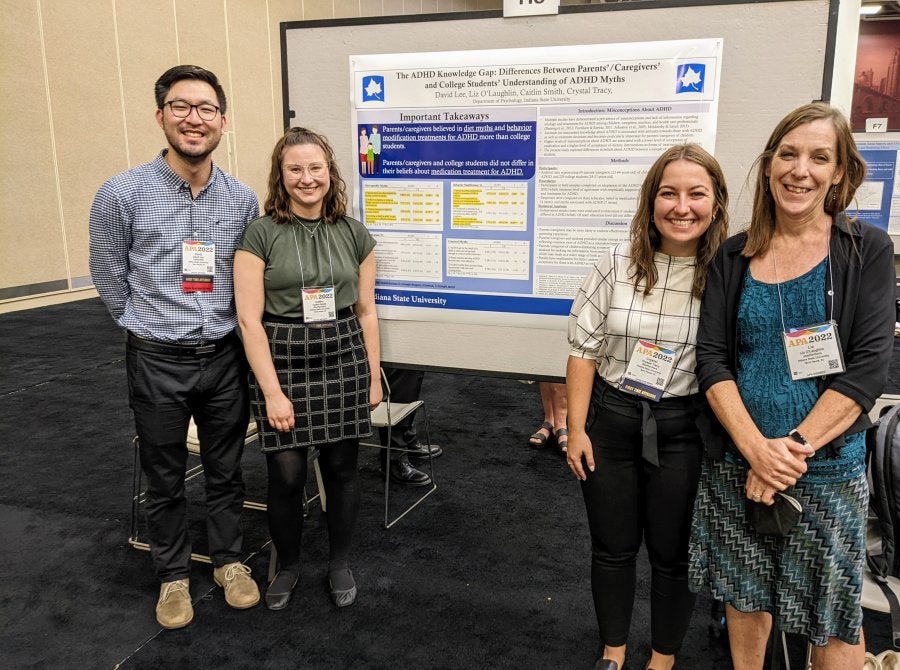
ADHD Lab – Dr. Liz O’Laughlin
Dr. O'Laughlin's lab is engaged in a number of projects related to evaluation for ADHD among children, including focus on parent, teacher and child self-report of behavior and influence of parent mental health and parenting style of child behavior.
Current Projects
Informants tend to provide discrepant ratings of child behavior, which can complicate the process of assessing behavior problems in children. The limited research on child self-report of behavior suggests that children may be better informants than parents or teachers in regard to internalizing symptoms. This project aims to enhance our understanding of the utility and limitations of child self-report in assessment for ADHD by identifying factors that contribute to discrepancy in parent-child report of symptoms.
Better understanding of factors that contribute to impairment among children with ADHD, such as emotional dysregulation, may result in more effective assessment, diagnosis, and treatment of ADHD and comorbid diagnoses. Recent studies in the lab have explored parenting emotional regulation (i.e., ability to regulate one’s emotions in the context of parenting), parent orientation to child emotions, parenting style, and child behavior (internalizing/externalizing behavior).
A few different projects in the lab focus on maternal self-report of ADHD and other diagnoses and potential influence on perceptions of child behavior and parenting. One study specifically looks at maternal mental health, positive and negative parenting practices, and child externalizing behavior. A second study, still in development, will explore maternal mental health, attributions of child behavior, and help seeking interest (interest in seeking child and/or family focused services).
ADAPT Lab (Adversity, Dissociation, and Psychological Trauma) - Dr. Liz Smith
Dr. Smith's lab is focused on posttraumatic stress disorder, dissociation, and other trauma-related mental health conditions.
Current Projects
Currently, we are engaged in a broad study of the impacts of psychological trauma on outcomes related to mental health and wellbeing, work and school functioning, and relationships. We are particularly interested in dissociative experiences such as those thought to be involved in the dissociative subtype of posttraumatic stress disorder (PTSD-D). Although accounts of dissociation exist across the study of mental health through history, this group of symptoms remains poorly understood and difficult to place within current models of psychopathology. Dissociation has historically been viewed as an outcome of trauma, but whether these experiences are truly the result of trauma remains unclear as well. PTSD-D was added as a subtype of PTSD to the most recent edition of the Diagnostic and Statistical Manual of Mental Disorders, which suggests a need to better understand this group of symptoms and the way they affect those diagnosed.
Correctional & Forensic Psychology Lab - Dr. Jennifer Schriver
Dr. Schriver’s lab focuses on correctional and forensic populations and issues related to the intersection of psychology and the criminal justice system.
Current Projects
We are currently examining ethical violations committed by psychologists that have resulted in disciplinary actions. We are particularly interested in learning about the types of violations related to correctional and forensic work.
We have recently completed a project on the use of bibliotherapy for the treatment of anxiety and depression in female offenders. Bibliotherapy involves reading self-help materials for therapeutic benefit, and it is a cost-effective treatment that requires minimal contact with a mental health professional. We found that symptoms of depression and anxiety were both significantly reduced after women read a workbook focused on ACT principles of mindfulness. We intend to continue exploring treatment needs of incarcerated women.
Suicide rates in correctional populations and correctional officers are high. Using suicide theories that examine the progression of ideation to suicidal behavior, our lab will investigate factors associated with increased suicidality in correctional officers and incarcerated individuals.
Evolution, Violence, and Empowerment (EVE) Lab – Dr. Becka Hahnel-Peeters
The EVE Lab investigates how women navigate threats of sexual violence through evolved psychological mechanisms, social alliances, and strategic behavior. The EVE Lab studies questions such as: How do women defend themselves—physically, emotionally, and socially—against the risk of sexual aggression? What roles do women’s social allies (i.e., “bodyguards”) play in women’s evolved defense systems? How do individual differences shape sexual and social relationships across development, context, and culture?

Current Projects
We've built the largest taxonomy of the behaviors women perform to defend themselves against an impending, ongoing, or completed sexual assault — including over 35 behavioral strategies.
We're examining how both men's and women's fear of specific crimes are likely influenced by the relationship between oneself and the perpetrator.
This project examines the cultural similarities and differences in moral judgments about sexual behaviors across 20 countries.
Lifespan Cognition & Brain Stimulation (LCABS) Lab – Dr. Ted Maldonado
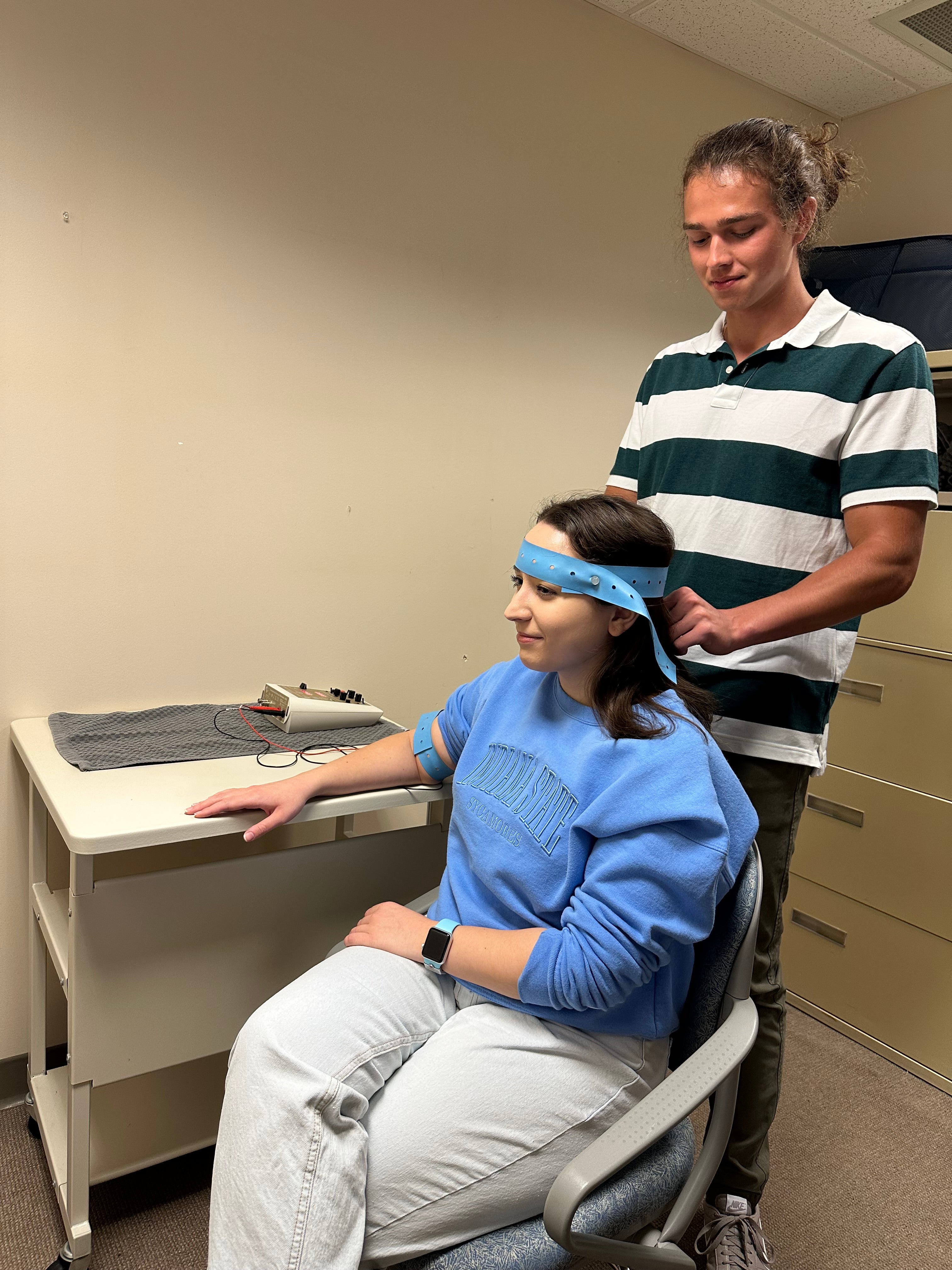
Dr. Maldonado's lab has several projects related to evaluating cognition in young and older adults, using non-invasive brain stimulation. We specifically focus on how the cerebellum contributes to non-motor cognitive behavior across the lifespan.
Current Projects
The purpose of this study is to evaluate how different parts of the brain contribute to learning and cognition in young and older adults. We will study behavior related to cognition (working memory, inhibition, set shifting, etc.) using a variety of different tasks and techniques such as transcranial direct current stimulation (tDCS).
The purpose of this study is to evaluate whether cognitive ability (working memory) might influence how well remediation techniques (transcranial direct current stimulation) work on young adults with anxiety. We will study behavior related to cognition and anxiety using different behavioral tasks, surveys, and non-invasive stimulation techniques.
The purpose of this study is to evaluate how differences in higher order cognition relate to levels of death anxiety in young and older adults. We will study behavior related to cognition and death anxiety using different behavioral tasks and surveys.
Mental Health Development Lab – Dr. Kevin Bolinskey
The primary area of focus for Dr. Bolinskey's lab is psychological measurement
Current Projects
Current studies include personality in college students; personality and neurocognitive indicators of liability to mental illness; and personality profiles of individuals with childhood PTSD.
A new study examines the utility of performance and symptom validity tests in the evaluation of ADHD in adults.
Metacognition for Recovery, Growth, and Engagement (MeRGE) Lab – Dr. Courtney Wiesepape
In the MeRGE Lab, we study how metacognition can support recovery, personal growth, and meaningful engagement for individuals living with serious mental illness.
Current Projects
This study explores how metacognition relates to self and interpersonal difficulties in personality disorders, with the goal of better understanding how people make sense of themselves and others.
This project investigates how different mental health symptoms evoke varying levels of stigma in society, highlighting how public perceptions can shape opportunities for recovery and inclusion in serious mental illness.
Social & Environmental Psychology Lab – Dr. Virgil Sheets
Dr. Sheets Lab conducts research on 4 things:
- Close relationships. This includes studies of friendship, love, sexuality, jealousy, & breakups.
- Environmental symbolism & meaning. This includes studies of the use of possessions and places to represent or expand your sense of self, including spiritually.
- Socio-spatial behavior. This includes studies of territoriality, place attachment, and environmental preferences.
- Evolutionary bases of behavior. This includes studies of the scientific application of evolutionary models to human behavior, in the areas listed above as well as others, e.g., social attitudes.
Current Projects
This laboratory study examined the effect of territorial displays on perceptions of other people. Data entry is underway.
This project explores the power of mountains to serve as a source of inspiration and motivation for some people. Data collection is underway.
Matt Johnson's master's project involves coding online singles ads for heterosexuals, homosexuals, and trans individuals to explore differences in mating preferences of these groups. Data coding is under way.
Tyler Good's master's project involves examining gender-related perceptions of people based on the type of vehicle they drive. Data collection is under way.
Karina Koo is exploring the role of different orientations toward causality in romantic relationships. Data collection is about to begin.
Hunter Krampe's dissertation explored the basis of negative perceptions of relationships formed when partners are on the "rebound." A defense will be scheduled soon.
Michael Bailey's master's project explored the role of the physical environment of home study spaces on students' success in online classes. A manuscript is under review.
Paige Bedore's dissertation will explore how parasocial relationships are similar vs different from ordinary social relationships. A research proposal is being developed.