Why Earn a Bachelor of Science in Civil Engineering at Indiana State?
In the Civil Engineering (BSE) program at Indiana State, you’ll build the technical knowledge, design experience, and real-world problem-solving skills to create safe, sustainable, and resilient infrastructure—right here in the Midwest and wherever your career takes you.
You’ll study in an engineering program that prepares you for the Professional Engineer (PE) licensure pathway, starting with the Fundamentals of Engineering (FE) exam. That early momentum can make a real difference as you grow into advanced roles and long-term leadership.
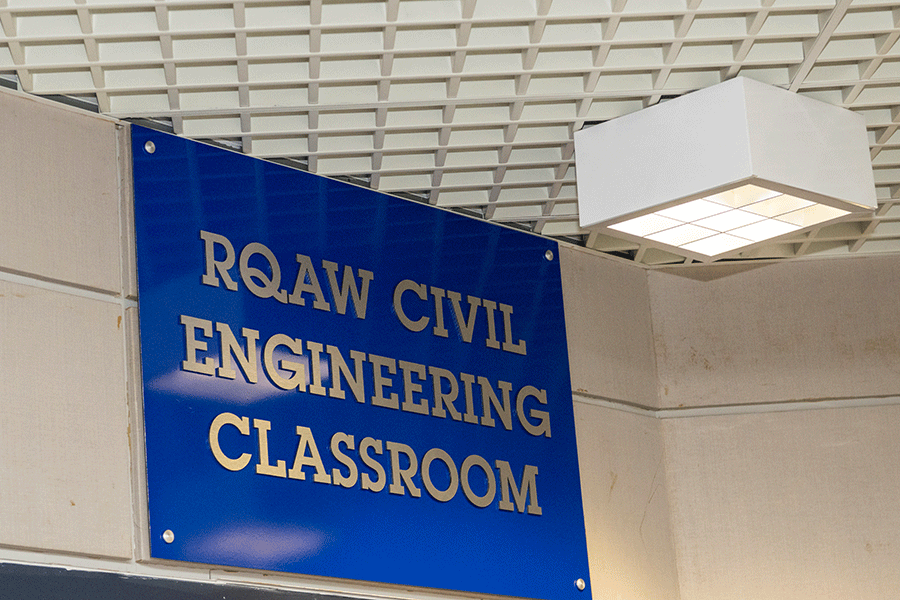
Through hands-on courses, collaborative projects, and applied learning, you will work with the tools and systems used in today’s engineering workplaces. Along the way, you’ll learn from expert faculty, engage in research-informed coursework, and apply engineering principles to the real challenges facing communities in Indiana and beyond.
Learn from Our Excellent Faculty
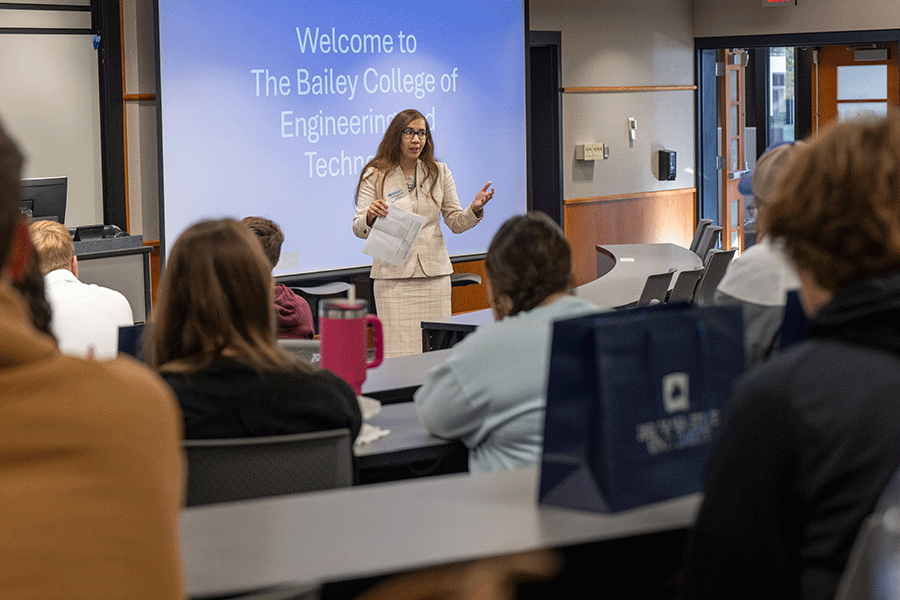
At Indiana State, you'll have the opportunity to learn in small classes where faculty know your name, support your goals, and understand how you learn best. Our professors hold advanced degrees and bring meaningful industry and research experience into the classroom—so what you’re learning connects to what you’ll do.
The Department of Engineering in the Bailey College of Engineering & Technology is known for a supportive environment, one-on-one mentoring, and a genuine commitment to your success. Faculty will guide you step-by-step through professional skill development and preparation for licensure and career advancement.
Enrich Your Learning
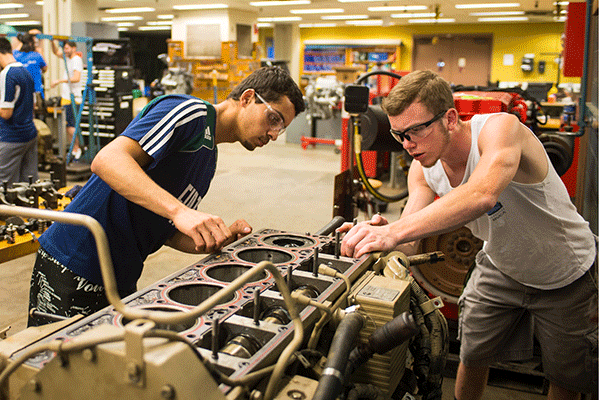
Civil engineering students learn and grow in the John T. Myers Technology Center, which is home to more than 20 state-of-the-art laboratories. You’ll gain practical experience in specialized civil engineering spaces, including the soils and geotechnical laboratory, CAD and technical graphics labs, and GIS and geospatial technology facilities. These labs put in your hands the same tools and equipment used by practicing engineers, ensuring that you graduate ready to contribute.
Beyond coursework and applied research, you can plug into activities and organizations that help you build community, leadership, and professional connections. These include the American Society of Civil Engineers (ASCE); the American Society of Mechanical Engineers (ASME); the American Institute of Steel Construction (AISC); the Construction Specifications Institute (CSI); and Epsilon Pi Tau (the international honorary for professions in technology).



What You’ll Learn in the Civil Engineering BSE Program
In this program, you’ll explore essential areas of civil engineering, including structural analysis and design, hydrology and water resources, environmental engineering, geotechnical engineering, and transportation systems. You’ll also strengthen applied technical skills through GIS and geospatial technologies, construction surveying, sustainability practices, and engineering graphics with CAD—skills employers value and communities rely on.
The Bachelor of Science in Civil Engineering at Indiana State University includes rigorous study in:
- Mathematics, Physics, and Chemistry
- Statics
- Dynamics
- Fluid and Soil Mechanics,
- Reinforced Concrete Design,
- Transportation Engineering,
- Hydrology
- Environmental Engineering
- GIS Technologies
- Technical Graphics
You’ll gain hands-on experience through laboratories, applied projects, and a senior capstone design course that brings everything together. The curriculum emphasizes critical thinking, ethical practice, teamwork, and lifelong learning.
The Civil Engineering degree program also supports preparation for the Fundamentals of Engineering (FE) exam and the Professional Engineer (PE) licensure pathway, helping you build credentials that can open doors to advanced responsibility and leadership in industry, government, or consulting.
Transfer Credit
Indiana State University accepts credit from regionally accredited colleges and universities within the United States, and from selected schools located outside the United States. Credit also may be granted for military training and experience. Previously earned college credit can be applied toward completion of the program per Indiana State’s transfer guidelines.
Career Possibilities for Civil Engineering Majors
Earning a Civil Engineering (BSE) from Indiana State offers you a clear, structured pathway to Professional Engineer (PE) licensure, beginning with completion of the degree and preparation for the FE exam. PE licensure—governed by the Indiana Professional Licensing Agency—opens doors to advanced responsibility, document signing authority, and leadership roles in engineering practice.
Graduates can work for engineering firms, government agencies, utilities, construction companies, and infrastructure organizations in a variety of roles including:
- Design Engineer
- Structural Engineer
- Project Engineer
- Transportation Engineer
- Water Resources Engineer
- Geotechnical Engineer
- Environmental Engineer
Civil engineers are in strong demand nationwide, with the U.S. Bureau of Labor Statistics projecting 5% job growth and more than 20,000 new positions nationwide by 2034. Indiana anticipates a 9.5 percent increase in civil engineering positions from 2023-33. With median national wages near $100,000 annually, Indiana State graduates will be well prepared to enter a stable, high‑paying profession.
Indiana State expands Engineering & Technology footprint, resources
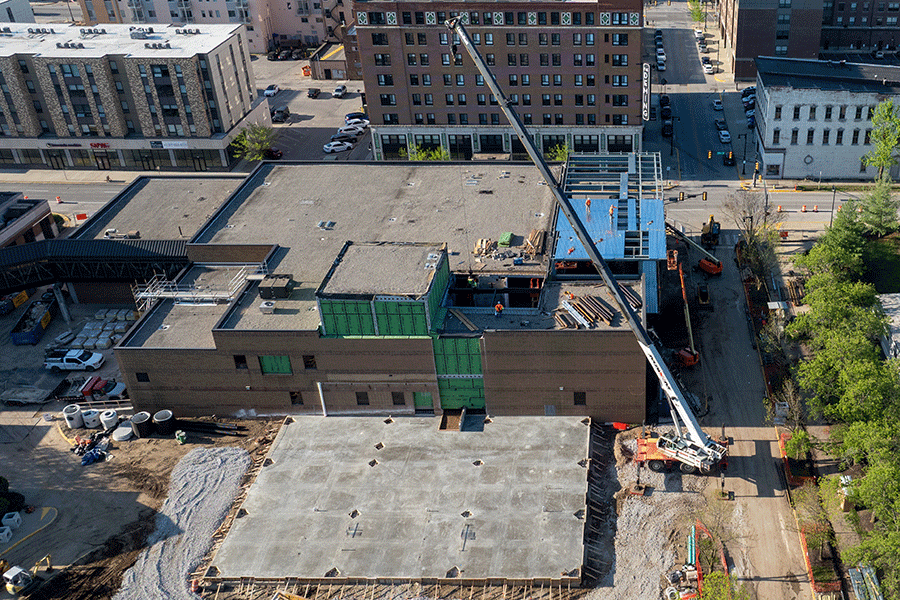
Indiana State University is in the midst of a $66 million, state-supported renovation of its Technology Annex for the Bailey College of Engineering & Technology. This project, scheduled to be completed in 2027, represents a significant investment in the College’s students and in the labs, classrooms, and other learning spaces that support their work.
Learn more about the Bailey College renovation project.
Related Programs
-

Mechanical Engineering (BSE)
Bachelor's
-
Packaging Engineering Technology (BS)
Bachelor's
-
Automotive Engineering Technology (BS)
Bachelor's