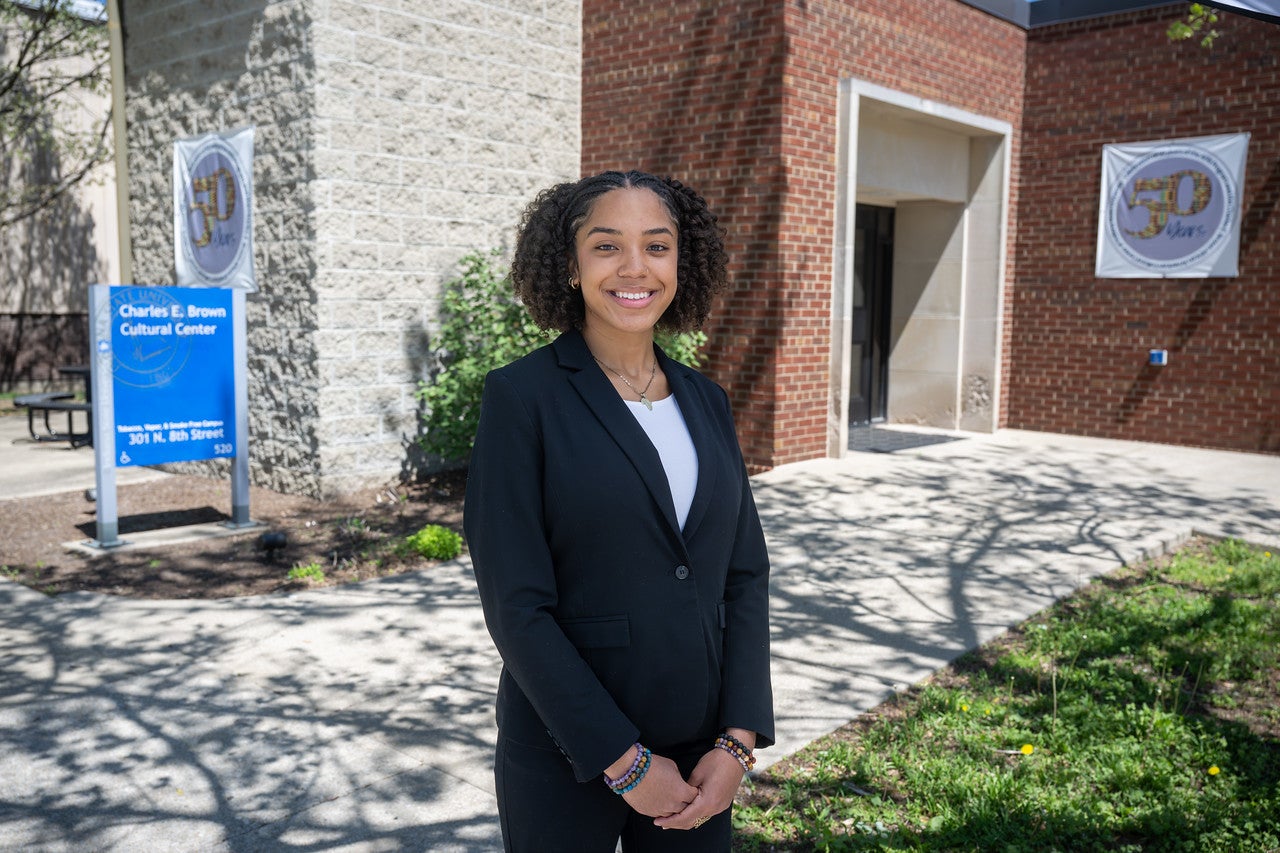
Three days before classes began at Indiana State University, Keyona Young made a decision that changed her life.
After graduating from high school, college wasn’t part of her plan. “I kind of went back and forth about it,” she says. “I had applied to a couple of colleges, but I decided I wasn’t going to go.”
A Terre Haute native, Young had always been familiar with Indiana State. Still uncertain about her next steps, she spent time working alongside her father at Glasco before realizing she wanted more – specifically, a college degree. She picked up the phone and called Indiana State’s Office of Student Financial Aid.
That phone call changed everything.
“I didn’t realize there were state-funded programs [along with scholarships] that made college affordable for me,” Young says.
Three days later, she was enrolled in classes.
Young’s path at Indiana State wasn’t linear. She explored majors ranging from biology to pre-veterinary and pre-medicine to political science before finding her place in applied medicine.
“I knew I wanted to pursue something in health, but I also had a strong interest in history and policy, so it took me a while to figure out what I wanted to do,” Young explains.
The answer came not just in the classroom but also through experience. Internships with the Indiana House Democratic Caucus and the City of Terre Haute introduced Young to the intersection of public policy and healthcare, possibly leading to a career in health law. She researched legislation, sat in committee meetings, and worked alongside other interns on projects aimed at improving public transportation accessibility.
“Seeing both state-level and local government was really eye-opening,” Young comments. “It helped me understand how policy affects people’s access to healthcare and other resources.”
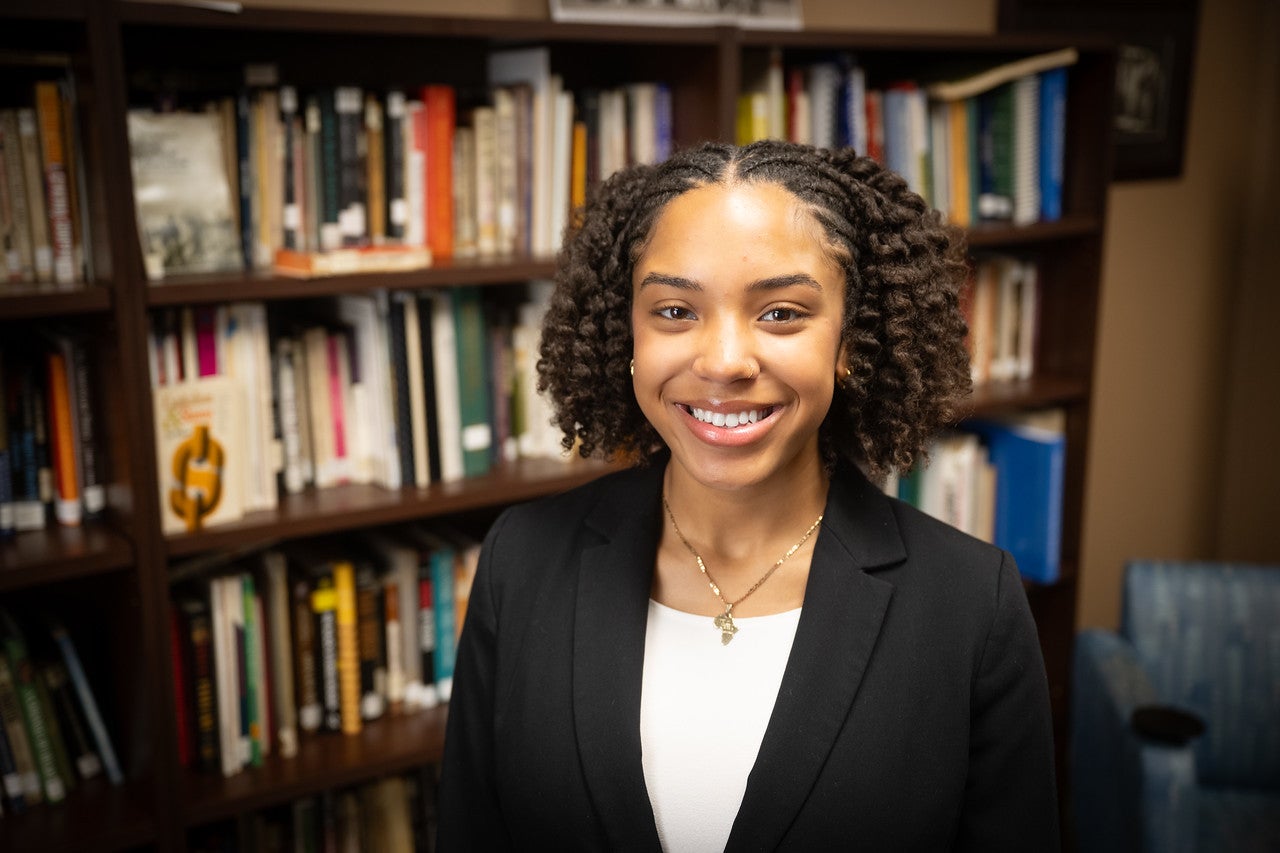
Those learning experiences helped her connect her academic interests to larger social issues. She added minors in civic leadership and African and African American studies, while continually asking herself where health, policy, and justice could work together.
“Realizing I could combine health and civic leadership in a career – that was huge for me,” Young says.
While academics broadened her interests, it was Indiana State’s campus community that defined Young’s Sycamore experience. As a commuter student during her first year, Young wanted to get involved on campus. She discovered the Charles E. Brown Cultural Center, which provides educational programming for students to appreciate different cultures and backgrounds. Once she found the Center, she knew she had found her people, she says.
“The Center really changed everything for me,” Young says. “It became a second home. It’s so welcoming and inviting. I was able to find and connect with other Black students at Indiana State. Every day, I’m walking into the Center to do my homework, hang out, or work.”

More than a place to study, the Center offered a sense of belonging. Assistant Director Valerie Craig became a mentor who encouraged Young to step into leadership roles and fully engage with campus life.
“She’s one of my mentors that I’ll probably have for the rest of my life. Her door is always open. She genuinely cares about us. You know she’s always there for her students,” Young explains.
That support extended across campus. From faculty mentorship to peer connections, Young found encouragement every step of the way.
“Indiana State really makes you feel supported,” she says. “Professors want to help, and they’re willing to share their experiences and advice. I can always go to someone for help.”
Young became active in the Honors College and found her voice through leadership in Indiana State’s chapter of the NAACP. During her senior year, she served as chapter president and took on leadership roles at the state level.
At her first national convention, she quickly realized the scope of the NAACP organization. Through advocacy work, national conferences, and collaboration with members across generations, Young developed confidence as a leader – and gained more clarity about her future.
“You really learn how to work as a team outside the classroom,” she says. “That experience showed me I want a career focused on social justice and service.”
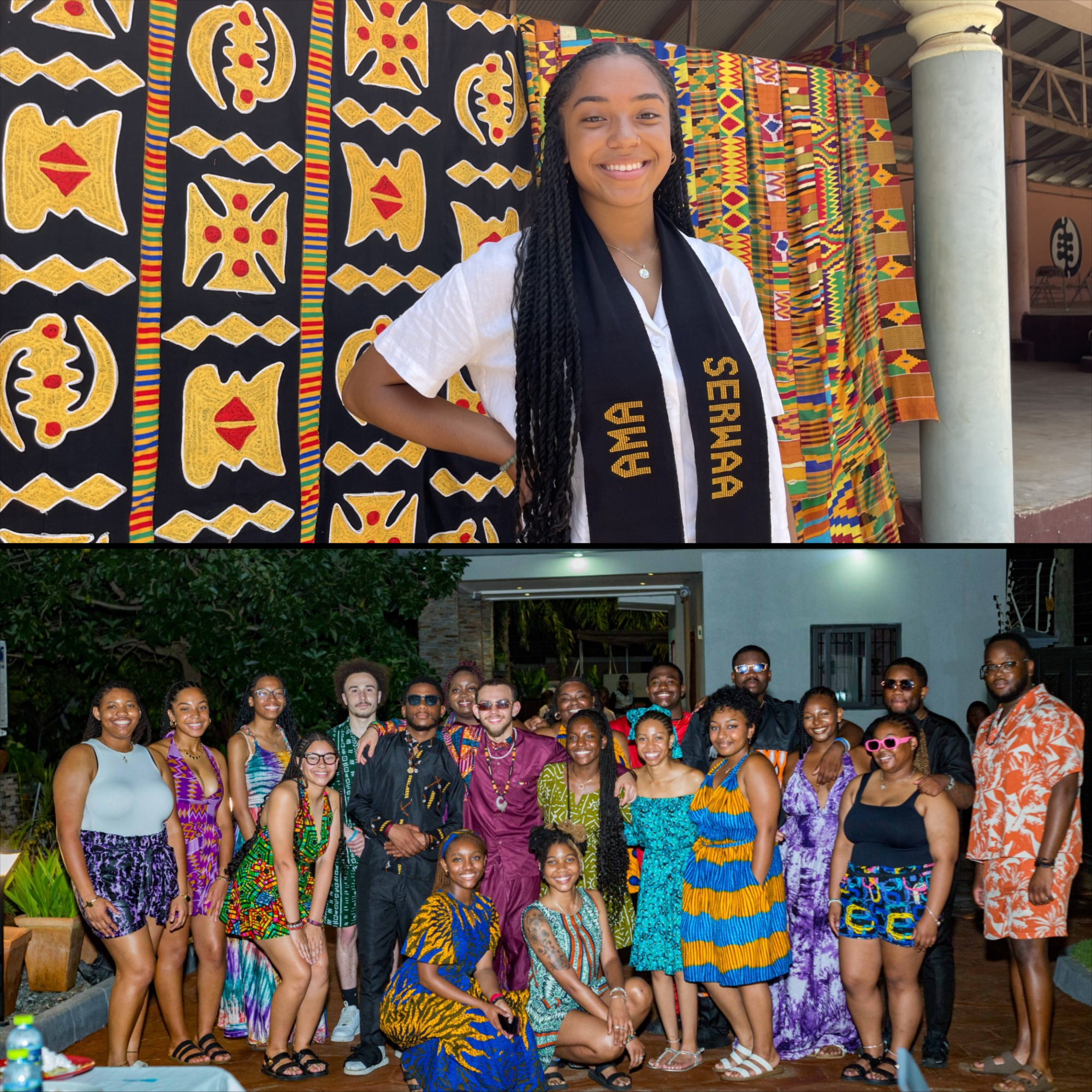
One of the most transformative moments of Young's college experience also took her far beyond Indiana. Through a study-abroad program in Ghana—made possible by Indiana State’s Experience Grant—Young explored African history, including the Transatlantic slave trade, and took part in travel opportunities alongside her best friend.
“We were just two girls from Terre Haute,” she says with a smile. “We never imagined going to Africa. As a Black woman, it was a very emotional and life-changing experience – and incredibly welcoming.”
Now, as graduation approaches, Young reflects on what she’ll miss most about Indiana State.
“The people. Definitely the people here,” she says without hesitation. “I know I’ll be even more emotional at Commencement. I’ve met so many wonderful people here. My professors, friends, peers – just the kind people you see walking around campus. People smile at me and ask how I’m doing. That’s something special. I’m going to miss that.”
For students who may be uncertain about their college path—as she once was—Young offers simple advice: lean into support.
“I think it goes back to the faculty and the students we have here,” she says. “People care about my success. They want me to do well and to pursue what I’m passionate about. That means a lot to me.”
And all it took was a phone call to begin her Sycamore journey – one that prepared Young not just for a career, but to make a difference.