Elizabeth Gonzalez doesn’t know what she would do without music.
Growing up in Elkhart, Indiana, Gonzalez found something in her high school band class she hadn’t found anywhere else: safety and a sense of belonging. Her band directors became family. By her junior year, she knew she wanted to become a music teacher so she could create the same kind of welcoming space that had changed her own life.
“Music basically saved my life,” Gonzalez says. “And I knew in that moment that I wanted to be able to give that same kind of support to my future students.”
What she didn’t yet know was how to get there.
As a first-generation college student, Gonzalez had no roadmap for navigating higher education. College applications, music school auditions, and financial aid were unfamiliar territory, and there was no step-by-step guide to follow.
“I had no idea what I was doing,” she says. “I will be the first ever in my entire family tree to get a bachelor’s degree, so I was figuring it out on my own.”
Her path to Indiana State University began with an unexpected conversation while working at a movie theater in high school. A coworker mentioned Indiana State’s School of Music. Gonzalez researched the school on her own, took a leap of faith, and decided to apply.
“Just like that, I said, ‘Yeah, I’ll do it.’ I still had no idea what I was doing,” she recalls.
Even getting to campus was a challenge. Without reliable transportation, she depended on friends and family to make the four-hour trip to Terre Haute. But once she arrived on campus for marching band camp, everything changed. She met people who shared her passion for music. She found community.
“It was amazing,” Gonzalez says. “I thought, ‘Oh my goodness, there are so many people here.’”
Still, the adjustment to college life—and to the demands of a music education major—was overwhelming. Music education students balance rigorous coursework in music performance, theory, and pedagogy all at once.
“It was a lot,” she recalls. “I didn’t really know what I was doing.”
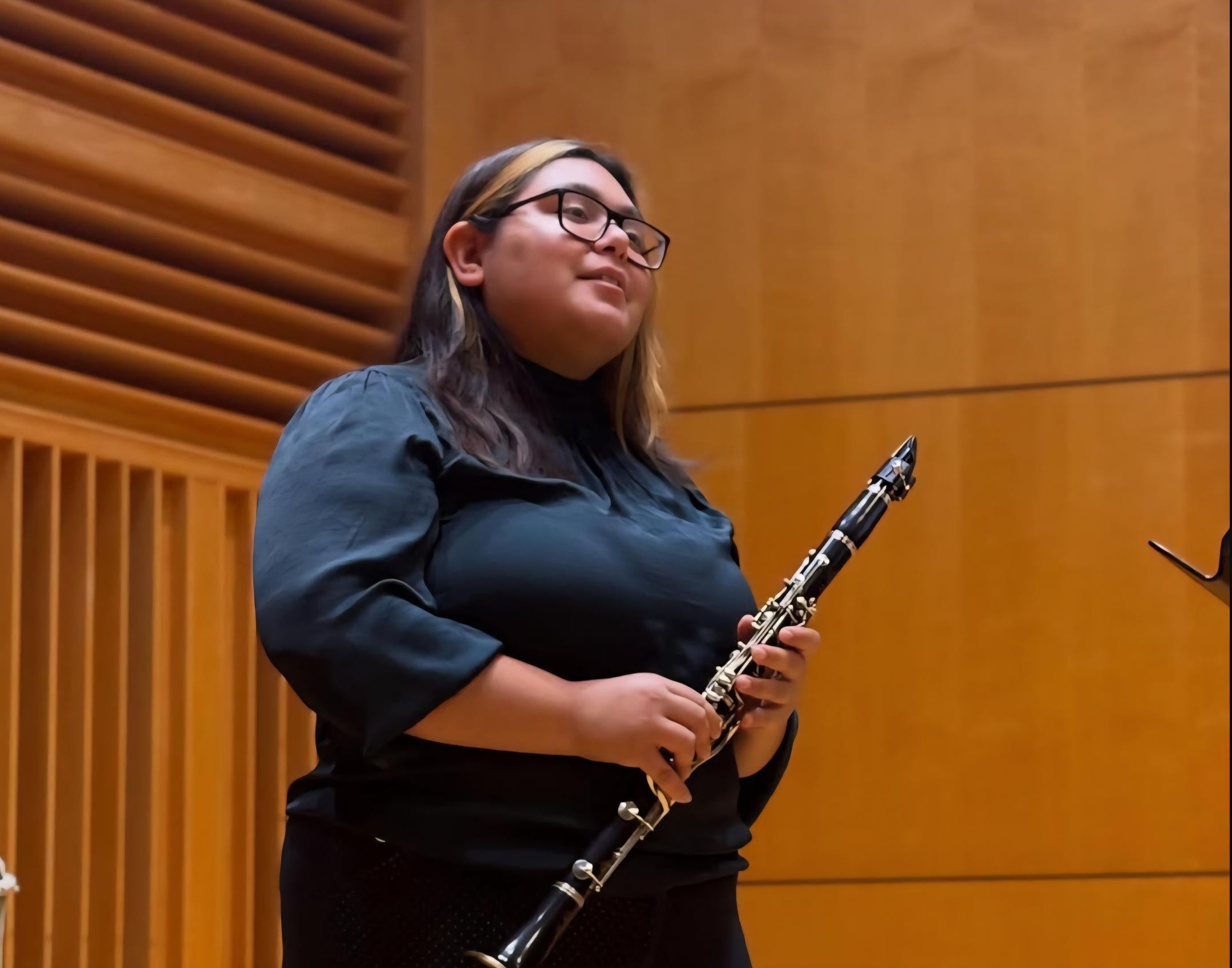
What kept her grounded were the connections she had built. She found belonging in the marching band, in student organizations including the Hispanic Latino Alliance and Kappa Kappa Psi [national honorary band fraternity], and among classmates who quickly became close friends.
Then, midway through her sophomore year, everything came to a halt.
Financial barriers forced Gonzalez to step away from Indiana State, separating her from her community.
“It was really tough. My friends… they were basically my new family,” Gonzalez explains.
She remained in Terre Haute for a while, working and relying on that support system, before the COVID-19 pandemic pushed her back home to Elkhart – and farther away from her goal of earning a college degree.
The years that followed were difficult, she recalls. Gonzalez marched in Drum Corps International, a non-profit drum and bugle corps, to continue building her musical skills. She worked. She saved money. She tried to figure out how to return to Indiana State.
“If people think that leaving halfway through your degree is hard, it is so much more difficult to come back,” Gonzalez shares.
Eventually, a friend invited her to move back to Terre Haute. Gonzalez spent years paying off debt and walked an hour to work each day because she didn’t have a car. Then, on her birthday, her friends surprised her with one.
“They didn’t like to see me struggle,” she says. “They wanted me to go back to school.”
That moment became a turning point.
“I cried a lot,” Gonzalez adds. “I told myself, ‘Yes, I want this. I want to go to school. If I don’t do it now, I’m never going to do it, and I really want a college degree.’”
Her clarinet instructor from Indiana State, Andrea Hoyt, also reached out, offering encouragement, lessons, and guidance on returning to campus. Gonzalez reauditioned and was reintroduced to the School of Music. Starting again wasn’t easy—she was older and had to rebuild connections—but this time, her life experiences became a strength with her peers. She found her community again.
“We give and get from each other,” Gonzalez says. “We have the same goals. I’m a role model to them, and they motivate me to keep pushing forward.”
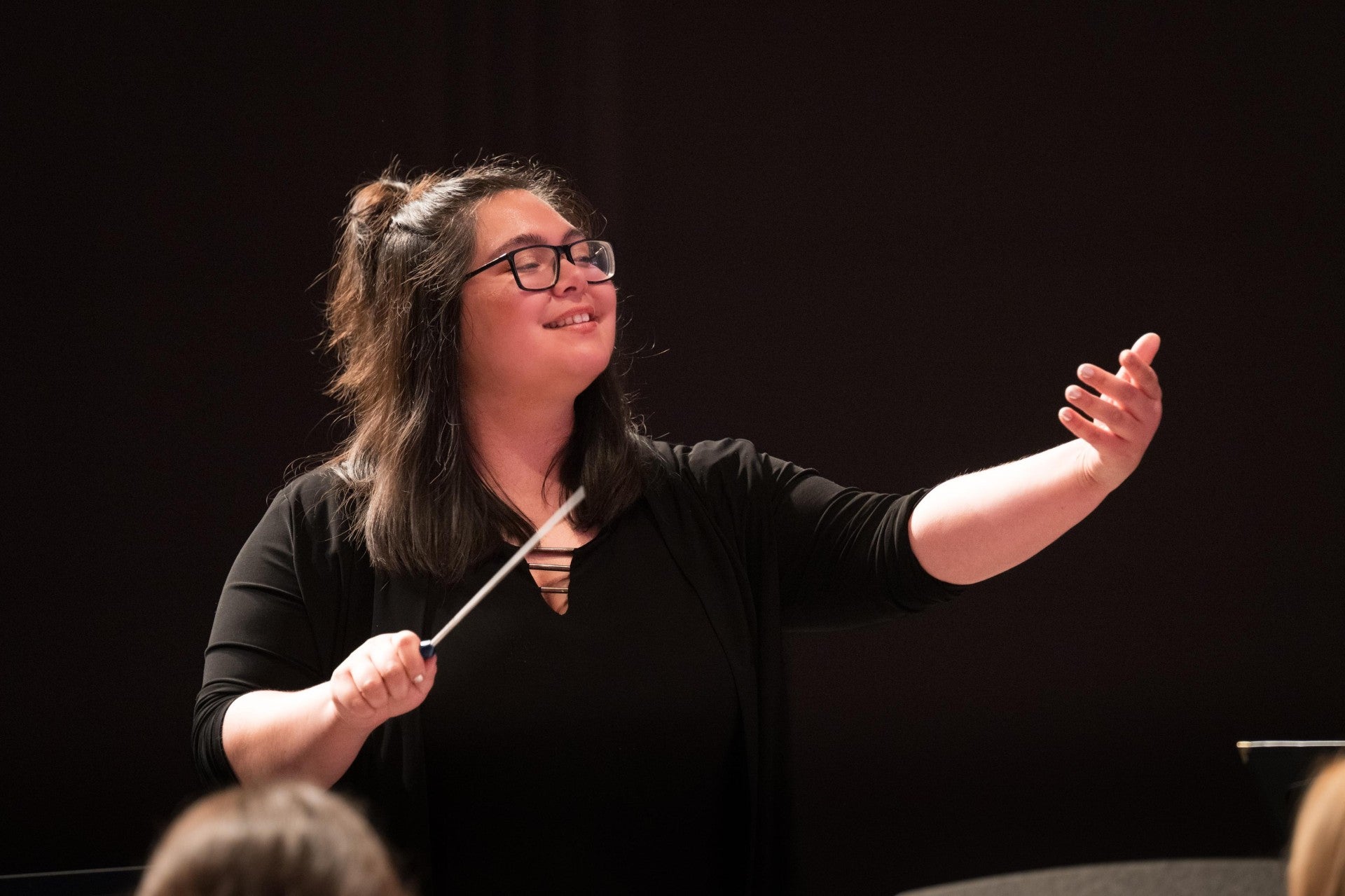
What reaffirmed her purpose was the music education program’s emphasis on teaching and community engagement. Through hands-on programs, Gonzalez gained real classroom experience – most notably through the Just Accessible Music [JAM] program. Offered through the Community School of the Arts, this program provides accessible music instruction for learners of all ages, skill levels, and abilities.
“These are students who have never touched an instrument, or people who think they’ll never be able to play,” Gonzalez says. “To see them realize they can play music, it’s incredible.”
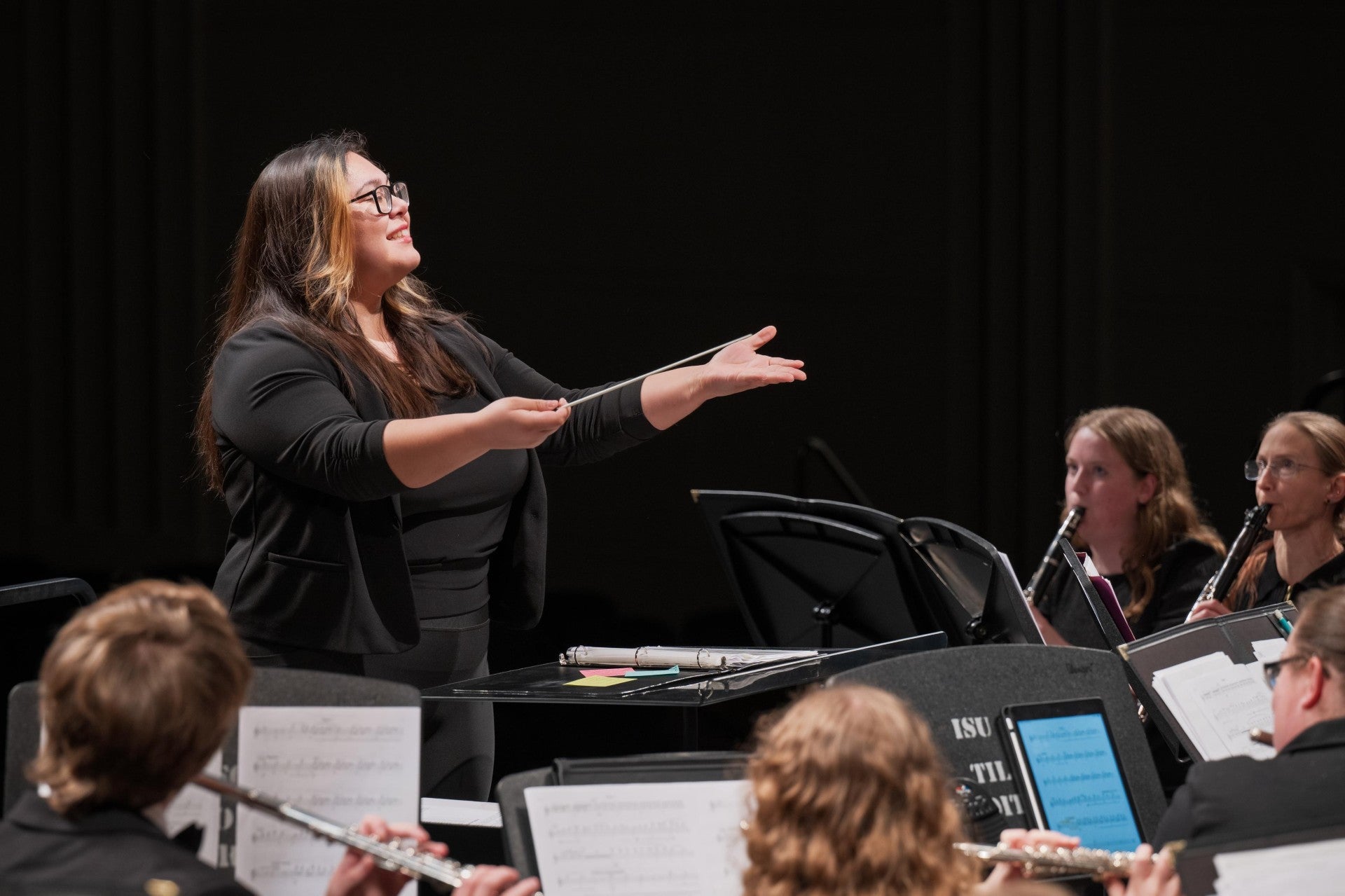
The experience demonstrates the kind of educator Gonzalez hopes to become.
“I want to be a safe space for all of my students,” she says. “I want them to be able to express how they feel through music – because music is a big part of our emotions.”
Gonzalez walked across the Commencement stage in May with a diploma finally in hand. She wasn’t just celebrating a degree. She was fulfilling a promise she made to herself years ago.
“It took longer for me, and that’s okay. I was finally able to accomplish this chapter of my life and succeed,” she says. “This is my degree with my name on it, not anyone else’s. I did it for myself. It was really difficult, but I did it. I pushed through it, no matter how hard it was.”
Through every setback, music guided her to where she wanted to be. Now, Gonzalez is ready to step into her own music classroom and mentor students just like herself. As she prepares to teach her students, she knows for certain that music can change lives – because it certainly changed hers first.