Why Earn a Master of Science in Sport Science at Indiana State?
The sport science field has shifted quickly in recent years. Today’s practitioners require more than strength and conditioning knowledge; they also must know how to interpret data, monitor athletes in real time, and make informed decisions that impact performance and health.
Indiana State’s Master of Science in Sport Science is designed to address these expanded competencies with curriculum that connects physiology, movement science, psychology, and analytics. This program prepares you for the National Strength and Conditioning Association’s Certified Performance and Sport Scientist® (CPSS) credential, which is becoming a standard expectation for advanced performance roles in leagues and organizations like Major League Soccer. The Sport Science MS helps you step into those spaces as a highly competent and confident professional.
Every course in this 36-credit program contributes to a clear goal: preparing you to operate in sport environments where performance, technology, and data support each other. Sport Performance Analytics is a required course, so every student learns how to interpret data and support decision making. Athlete monitoring is also built into the curriculum to reflect how sport science is practiced in collegiate, professional, and tactical settings.
The dual degree tracks – applied internship or thesis/research – are tailored to match your career plan, whether that means moving directly into practice or pursuing doctoral study and research.
Learn from Our Excellent Faculty
Graduate study at Indiana State is built around access. You will work closely with your professors in small classes where research, mentorship, and collaboration are part of your daily experience.
Our faculty bring extensive research backgrounds and deep applied experience into their classes. They’ll help you connect what you’re learning to how the field actually works, and they’ll guide your development of the advanced clinical and analytical skills you’ll need to succeed in academic or client care settings.
They will also encourage you to volunteer as an exercise coach, instructor, or mentor at local hospitals, clinics, fitness facilities, and school corporations.
Enrich Your Experience
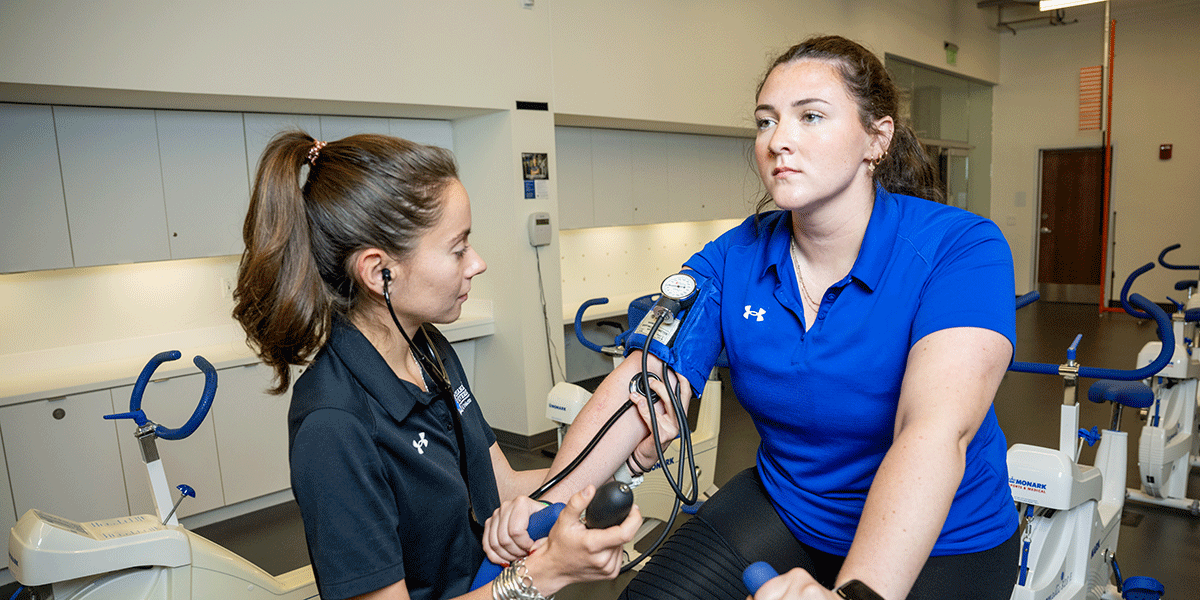
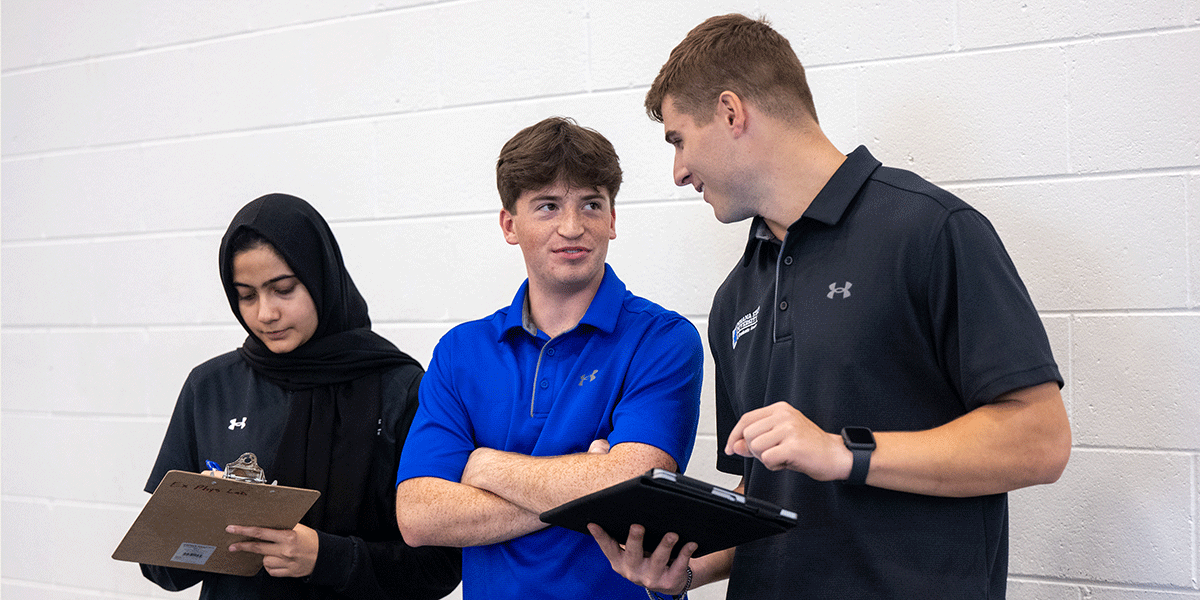
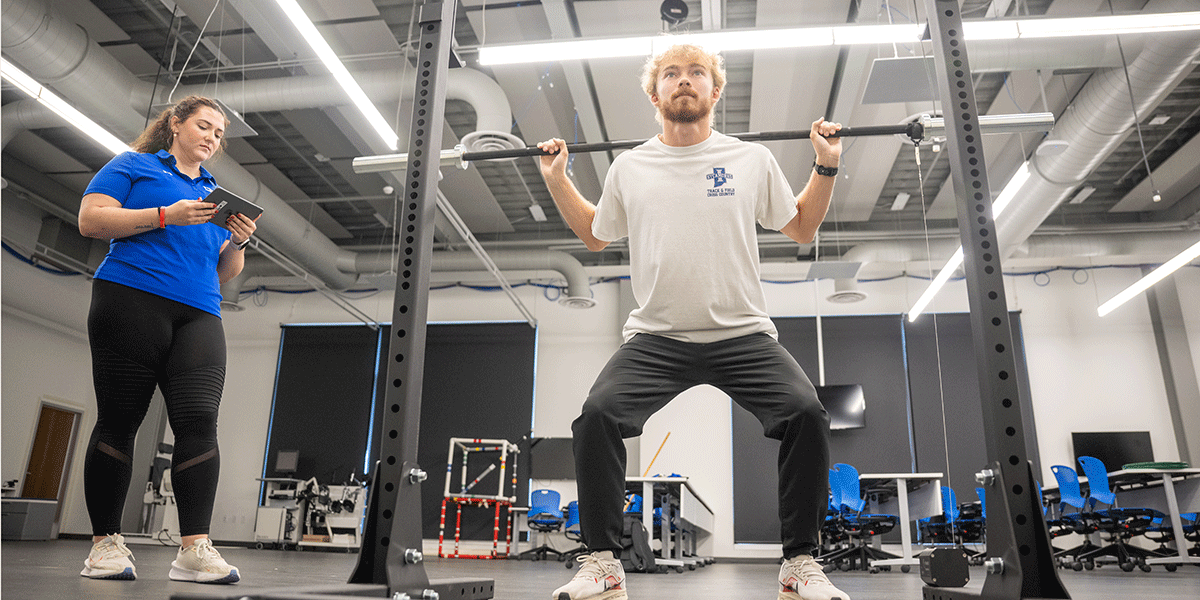
In the Department of Kinesiology, Recreation, and Sport, you’ll learn by doing, in laboratory spaces that reflect how sport science is practiced today. These include a biomechanics lab, an exercise science lab, a motor learning lab, and a strength and conditioning lab. Hands-on learning activities include laboratory assessments, performance testing, and field-based athlete monitoring where data is collected, interpreted, and used to guide decisions.
Through internships and research experiences, you’ll apply your skills in such settings as college athletics departments, professional sport organizations, or tactical performance environments. These activities will help you build confidence and step into your career with a clear direction.

What You’ll Learn in the Sport Science Program
The MS in Sport Science is a 36-credit-hour program combining research with practical experience in exercise science, physiology, psychology, human biomechanics, exercise testing, motor learning, strength conditioning, and human performance. The curriculum prepares you to successfully complete the American College of Sports Medicine Health Fitness Specialist or Exercise Specialist exams, or the National Strength and Conditioning Association’s (NSCA) Certified Performance and Sport Scientist® (CPSS) credential.
Graduates of this program will be able to:
- Design and interpret research in human performance
- Build advanced strength and conditioning programs
- Conduct performance testing and athlete assessment
- Apply periodization to training and program design
- Use performance analytics to guide decision making
- Analyze movement and motor learning
- Apply sport psychology to improve performance outcomes
- Evaluate biomechanics and movement efficiency
Coursework
(Required)
- KIN 511 Research in Human Performance
- KIN 576 Advanced Strength and Conditioning
- KIN 588 Sport Performance Testing and Monitoring
- KIN 617 Periodization and Program Design
- KIN 620 Sport Performance Analytics
- KIN 660 Motor Learning and Human Performance
- KIN 666 Applied Sports Psychology
- KIN 680 Advanced Physiology of Exercise
- PE 685 Biomechanics of Sport Techniques
(Suggested Electives)
- KIN 577 Psychological Aspects of Sport Injury
- KIN 575 Recovery and Regeneration in Sport Performance
- KIN 602 Independent Research in Kinesiology
Your program concludes with a culminating experience: either the completion of a six-credit thesis project or a six-credit internship experience. The internship offers practical exposure to career options in adult fitness, wellness, or sports performance. For the thesis, you will prepare and submit a proposal for approval, and will present an oral thesis defense at least seven weeks prior to the date your degree will be conferred.
Financial Assistance and Scholarships
Graduate Assistantships are based on program, department, and college need and availability.
Career Opportunities
The master’s degree in Sport Science at Indiana State prepares you to work in collegiate athletics and professional sport organizations, where you’ll support athletes through testing, training design, and performance monitoring. These roles require professionals who can interpret data, understand performance systems, and apply that knowledge in real time.
The program also prepares you for tactical performance settings, including military, law enforcement, and fire and rescue. In these environments, sport science is used to support readiness, resilience, and long-term performance in high-stakes conditions.
If you’re interested in research or doctoral study, the thesis pathway gives you the experience needed to move forward in academic or applied research settings.
Graduates pursue roles such as:
- Sport scientist
- Performance analyst
- Strength and conditioning specialist
- Athlete monitoring specialist
- Performance data analyst
- Applied researcher

Admissions Requirements and Instructions
All students seeking admission to the Sport Science graduate program must apply to be accepted as a graduate student by Indiana State University. Enrollment is accepted for Fall and Spring semesters.
To be assured of consideration, all materials must be submitted by August 1 for Fall admission and by December 1 for Spring admission. Students are selected based on academic background and the review of additional application materials specifically required by the Sport Science MS program.
Application Instructions
The following are application instructions and deadlines for the Sport Science MS program.
How to Apply
Complete your online application for program admission at apply.indstate.edu/portal/apply?tab=overview.
Submit official transcripts from all colleges previously attended. To be official, transcripts must be sent directly from the college attended to: Graduate Admissions, Indiana State University, Welcome Center, 318 North Sixth Street, Terre Haute, IN, 47809. E-transcripts should be sent to admissions@indstate.edu.
Submit a nonrefundable application fee of $45.00 (U.S. citizens and permanent residents) or $65.00 (international students) payable by Visa, MasterCard, or check or money order payable to Indiana State University. Submit payment to: Indiana State University, Graduate Admissions, Welcome Center, 318 North Sixth Street, Terre Haute, IN, 47809.
Submit the following as part of the online application process.
- Three formal letters of recommendation with reference names, emails, and phone numbers.
- A personal statement essay describing your research interests, academic career goals, experience in the field of sport science, and how graduate school will help you reach your career goals. Please indicate if you would like to be considered for Graduate Assistantship funding and a tuition fee waiver.
- A current curriculum vitae.
International applicants must submit official scores for the Test of English as a Foreign Language (TOEFL) or provide equivalent evidence of language proficiency. Submit scores to: Indiana State University, Graduate Admissions, Welcome Center, 318 North Sixth Street, Terre Haute, IN, 47809.
If studying in the United States, a copy of your current I-94 card, F-1 or J-1 visa, and 1-20 or DS2019 are required. If currently in the United States but not studying, a copy of the applicable visa must also be submitted.
Finally, all international applicants to Indiana State University must complete an affidavit of financial support. You can upload the affidavit of financial support and other required documents to your online application. For important information, see Instructions for International Students.
To be assured of consideration for admission, all application materials must be submitted by August 1 (for Fall entry) or December 1 (for Spring entry). All materials must be received by the deadlines. Applications and application materials received after the deadlines will not be considered for admission.
Next Steps
Once admitted, you will receive notification from the University as well as your University ID number, which is needed to activate your University Username on the MyISU Portal. The Portal offers access to online registration, University records, and other important University services, including email and University announcements.
Note: Returning Indiana State University students must apply for re-admission if they have not attended Indiana State University for more than two calendar years.
-

Sport Leadership and Administration (MS)
Master's
-
Athletic Training (MS)
Master's
-

Occupational Therapy (MS)
Master's